Key Takeaways
The clear subject
This piece is about transforming one calm café portrait through many visual styles until it finally feels truly different.
The main lesson
Styles can look alike when the same pose, framing, and face structure stay in place.
The strongest change
A real break happens when the world inside the picture changes, not only the line and shading.
A small language bonus
A short Dutch mini-lesson adds simple, reusable café phrases from the Netherlands (Europe).
Story & Details
A cozy beginning, then a harder challenge
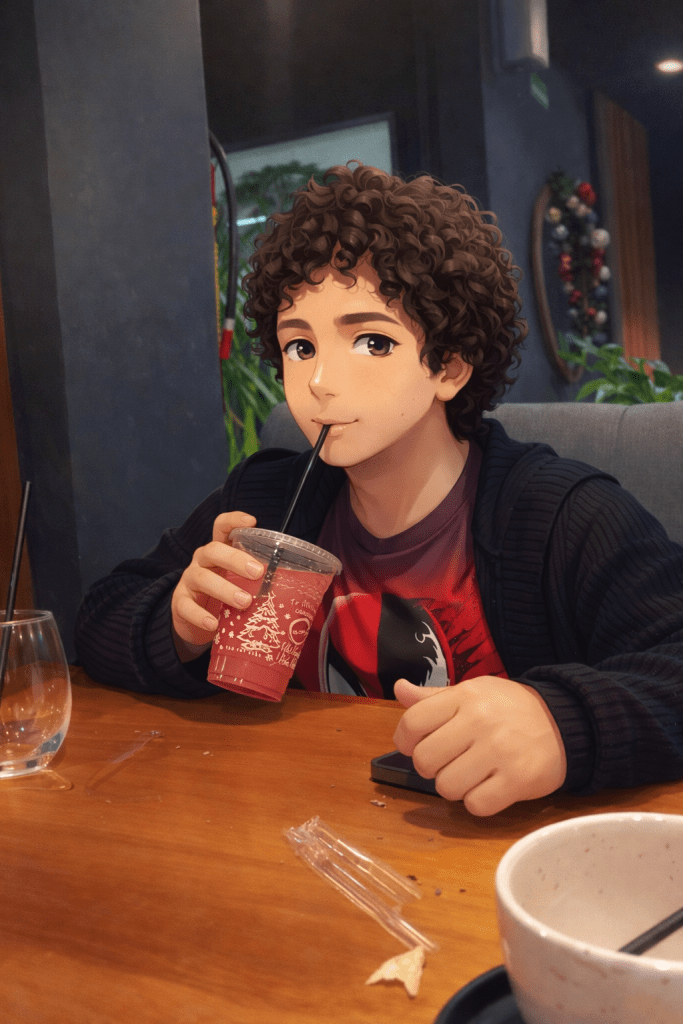
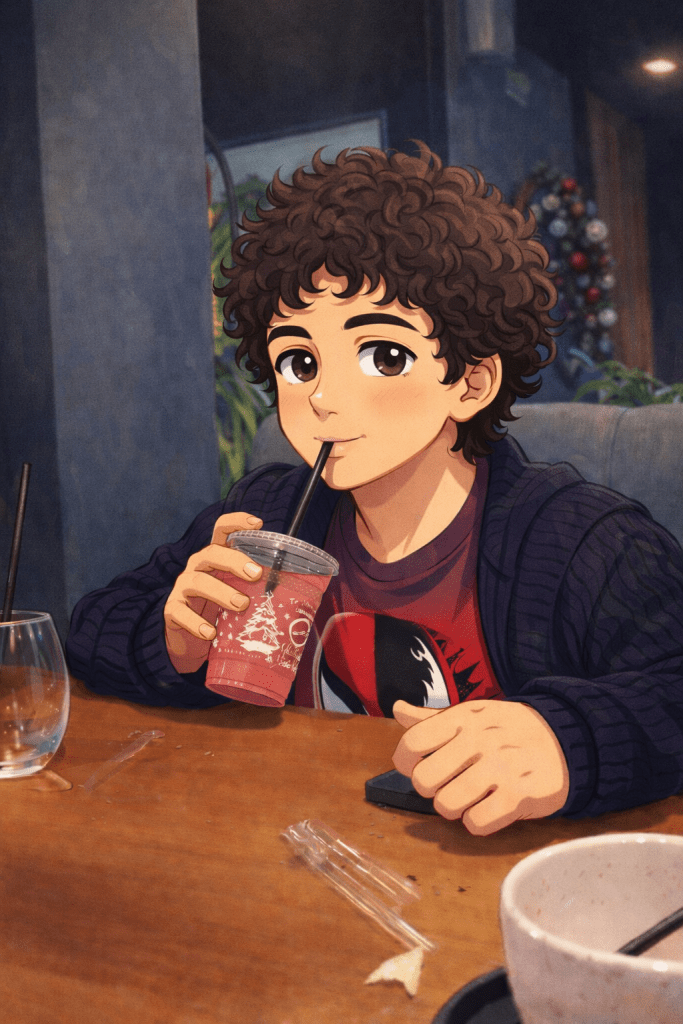
A soft, playful image sets the mood: a small purple plush figure sits on a wooden table, built for charm and clean shapes. The next focus is more personal and more demanding: a café portrait of a young man with dark curly hair, drinking a pink beverage through a straw, with small table details nearby. The goal is simple to say and hard to deliver: keep the person recognizable while making the style feel new each time.
Why “classic,” “modern,” and “cartoon” can still feel the same
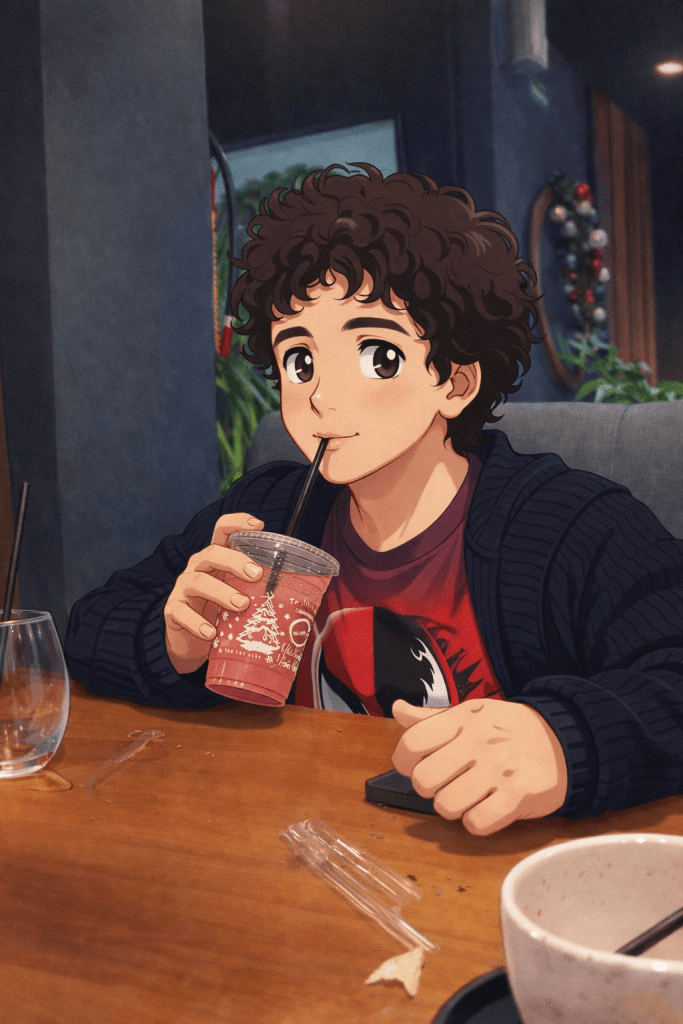
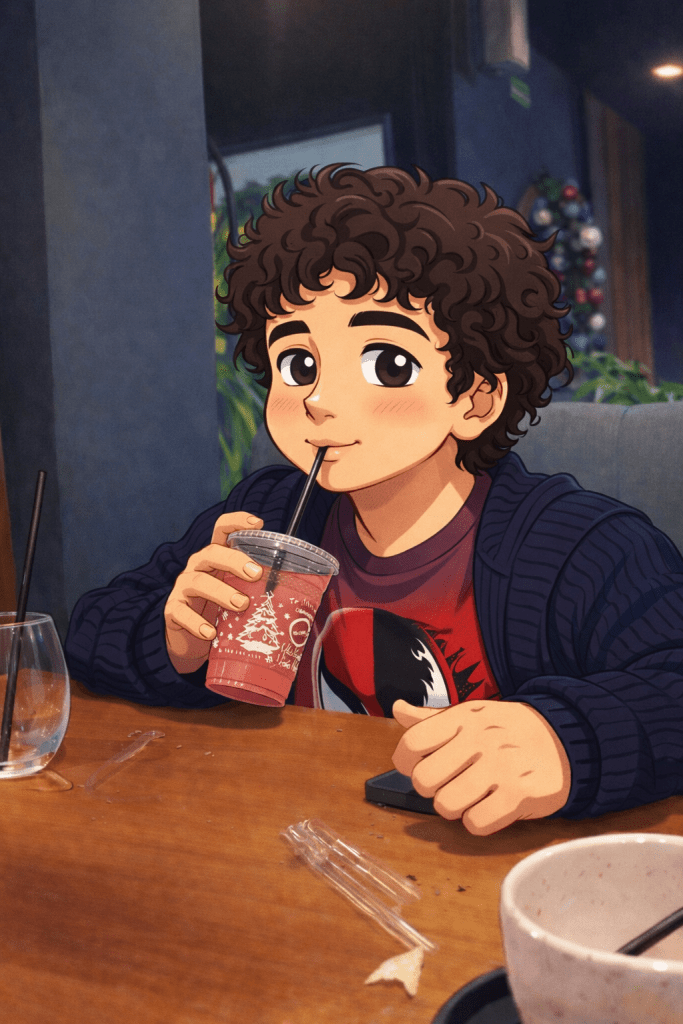
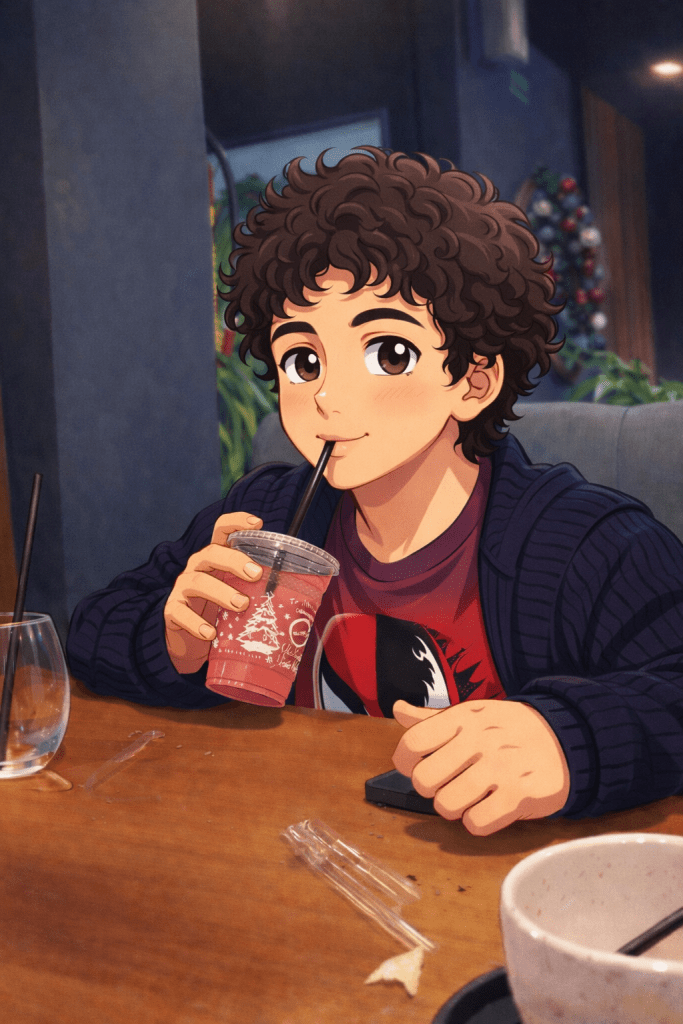
Different style names often change the surface first. Lines grow cleaner. Shading grows smoother. Features become more rounded. Yet the brain still sees one strong constant: the same calm face, the same close framing, the same light, the same quiet table moment. When those anchors stay fixed, the result can feel like one picture wearing different outfits.
The moment the brief becomes a demand
By January two thousand twenty-six, the push is no longer about a nicer finish. It is about a bigger jump. The request becomes firm: the style must stop repeating itself, even if the person stays easy to recognize. That demand forces a switch from polite variation to true disruption.
The break that works: changing the world rules
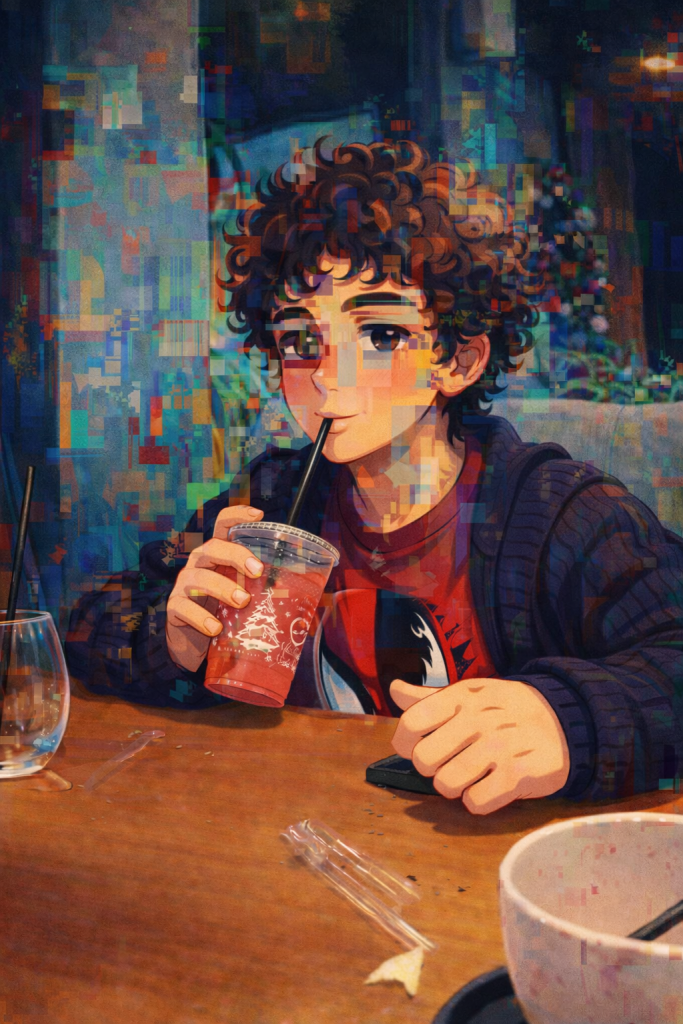
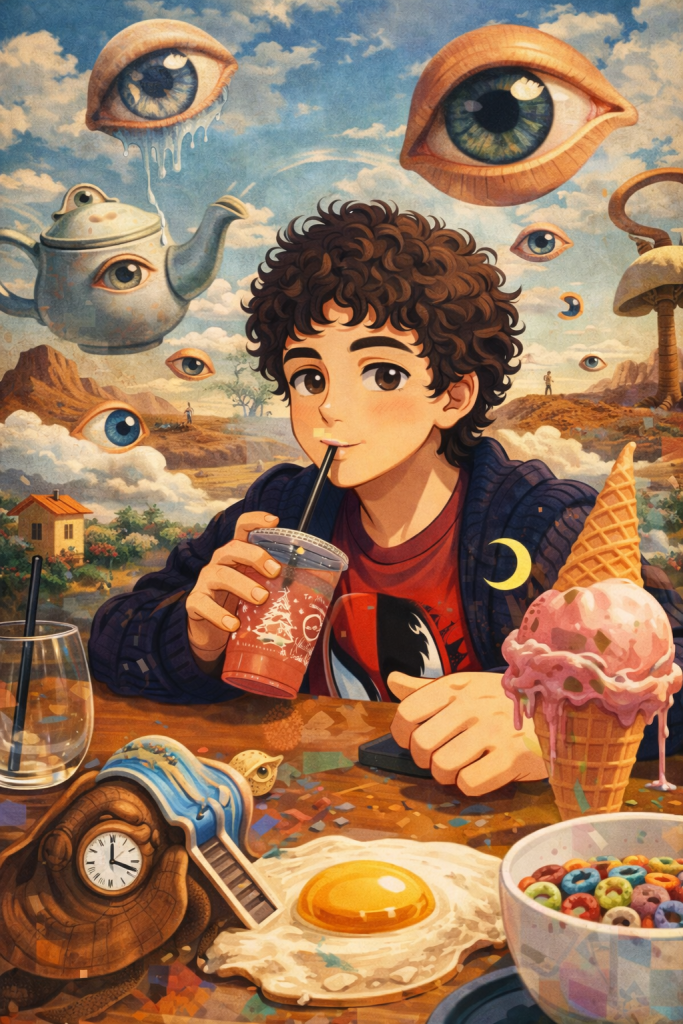
An experimental route can fracture the image with distortion and scattered color, turning neat realism into tension. The clearest break, though, comes from surreal collage. Floating eyes can drift through the scene. Objects can become too large or too small. The table can feel like a stage for dream logic. The person stays as the anchor, while the world becomes strange on purpose.
Dutch mini-lesson for a café moment
A simple way to learn Dutch is to keep the full meaning first, then zoom into each word.
A friendly request for a drink:
Ik wil graag koffie.
Meaning in one line: a polite way to say a coffee is wanted.
Word-by-word: Ik = I; wil = want; graag = gladly, with pleasure; koffie = coffee.
Natural variants: Ik wil graag een koffie. Ik wil graag koffie, alstublieft.
A polite add-on:
Alstublieft.
Meaning in one line: a polite “please,” also used when handing something over.
Word-by-word: alstublieft = please, if you please.
Natural variants: Alsjeblieft is more casual.
A small thanks:
Dank je wel.
Meaning in one line: a standard “thank you.”
Word-by-word: dank = thanks; je = you; wel = well, truly, adding warmth.
Natural variants: Dank u wel is more formal.
A word that fits the feeling
One English word can name the near-familiar, near-strange effect that appears when a picture almost feels normal, but not quite: uncanny. It suits art that keeps the face recognizable while the world becomes unsettling and new.
Conclusions
A softer ending with a clear takeaway
The most useful lesson is simple. If several styles still feel alike, the solution is not only new lines or new shading. The solution is a stronger rule change. Surreal collage does that quickly, turning a calm café moment into a world that cannot be predicted.
Selected References
[1] https://wordpress.com/support/markdown-quick-reference/
[2] https://www.moma.org/collection/terms/collage
[3] https://www.moma.org/collection/terms/surrealism
[4] https://www.etymonline.com/word/uncanny
[5] https://www.youtube.com/watch?v=1YE_Zas-A5A
Appendix
Anime
A visual style linked with Japanese animation from Japan (Asia), often using clear shapes, stylized faces, and simplified shading.
Caricature
A cartoon approach that exaggerates features on purpose, often to add humor or strong character.
Collage
An art method that builds a new image by combining separate pieces into one whole.
Glitch Art
A digital look that uses error-like effects on purpose, such as blocks, noise, and distorted color.
Gouache
A paint technique that creates opaque, matte color, often used for bold illustration.
Surrealism
An art approach that uses dream logic, mixing normal things in strange ways to create surprise.
Uncanny
A feeling where something seems familiar but also unsettling, because it does not fully match what the mind expects.

 My Diary - Leonardo Cardillo